
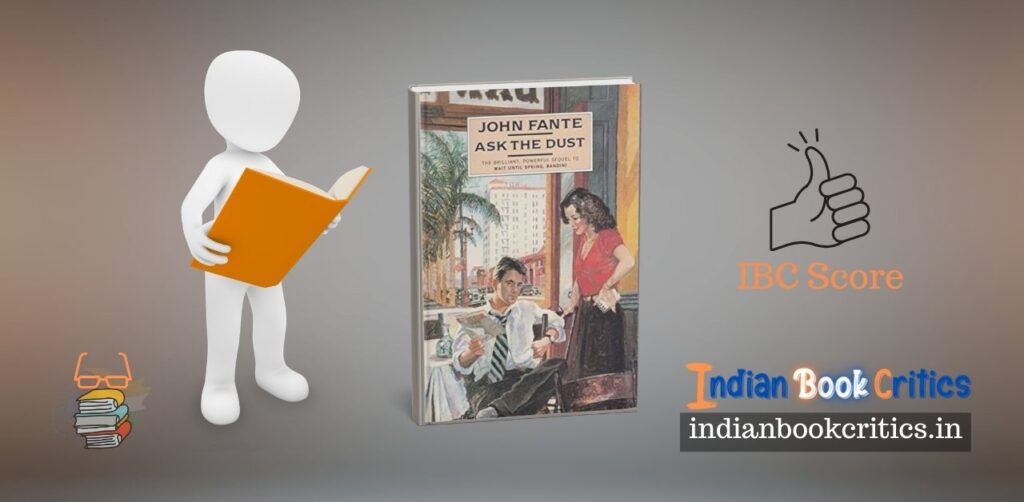
Among the writers often mentioned alongside Charles Bukowski, few occupy a more important place than John Fante. Bukowski himself repeatedly acknowledged that discovering Fante’s writing was a turning point in his own literary life. For readers who admire Bukowski’s raw honesty, his rough humour, and his fascination with the struggles of ordinary people, Fante offers something both familiar and quietly different. If Bukowski writes with the voice of someone who has survived the wreckage of life, Fante often writes with the restless energy of someone who is still trying to become something.
Fante’s most celebrated novel, Ask the Dust, remains one of the finest portrayals of artistic ambition and loneliness in American literature. Though published in 1939, the book still feels startlingly modern in tone. It captures the fragile psychology of a young writer who believes in his own greatness even while he struggles with poverty, rejection, and emotional confusion. The novel is not grand in scale. There are no sweeping historical events or complicated plot structures. Instead, it focuses on the messy life of a young man wandering through Los Angeles with a typewriter and a dream.
The world of Arturo Bandini
The narrator of Ask the Dust is Arturo Bandini, a young writer who has come to Los Angeles hoping to become famous. When readers first encounter him, he is living in a cheap hotel room in Bunker Hill, counting coins and worrying about his next meal. Yet despite his poverty, Bandini is filled with enormous pride. He believes with absolute conviction that he will one day become a great writer. This mixture of arrogance and insecurity forms the emotional centre of the novel.
Bandini is not an easy character to admire. He can be cruel, childish, and painfully self-absorbed. At times, he behaves with shocking insensitivity toward the people around him. Yet these flaws make him feel deeply human. Fante refuses to polish his protagonist into a heroic figure. Instead, he allows readers to see every awkward impulse and emotional contradiction.
Bandini’s greatest struggle is not only financial. It is psychological. He is haunted by the fear that he may never achieve the literary greatness he imagines. At the same time, he cannot stop imagining it. Every rejection from a magazine editor feels like a personal catastrophe. Every small success becomes proof that destiny is waiting just around the corner.
Los Angeles as a restless landscape
One of the most striking elements of Ask the Dust is its portrayal of Los Angeles during the Depression era. Fante captures the city as a place of both opportunity and disappointment. It is full of sunlight, empty streets, struggling workers, and dreamers who have arrived hoping to reinvent themselves.
Bandini wanders through cafés, cheap bars, and dusty roads on the outskirts of the city. The atmosphere often feels dry and restless. Even the physical environment reflects the characters’ emotional states. Dust storms appear in the narrative almost like psychological symbols. They suggest instability, uncertainty, and the constant possibility that everything might collapse.
Yet Fante also shows moments of beauty within this landscape. The city’s sunlight, the quiet hills, and the strange stillness of certain streets create an atmosphere that feels almost hypnotic. Readers sense that Los Angeles itself has become part of Bandini’s imagination.
The complicated presence of Camilla Lopez
The novel’s emotional tension intensifies when Bandini meets Camilla Lopez, a waitress at a local café. Camilla becomes the most complicated relationship in his life. Their interactions range from attraction to hostility, from longing to misunderstanding.
Bandini feels fascinated by Camilla from the moment he meets her. Yet his fascination quickly becomes tangled with insecurity and prejudice. Camilla is of Mexican descent, and Bandini often reveals uncomfortable attitudes shaped by the social prejudices of his time. At the same moment, he desires her approval and companionship.
Camilla herself is not simply an object of romantic interest. She struggles with her own sense of identity and belonging. She feels trapped between cultures and uncertain about her place within the city. Her emotional instability becomes increasingly apparent as the novel progresses.
The relationship between Bandini and Camilla is therefore not a traditional love story. Instead, it becomes a painful exploration of loneliness and miscommunication. Both characters seem to want connection, yet they repeatedly push each other away through pride, fear, and emotional confusion.
Ambition and humiliation
One of the most powerful themes in Ask the Dust is the fragile relationship between ambition and humiliation. Bandini dreams of literary recognition, yet his daily life is filled with reminders of his failure. He struggles to pay rent. He begs editors to read his stories. He watches other people live ordinary lives while he remains suspended between hope and disappointment.
Fante portrays these struggles with remarkable honesty. Bandini’s ambition often makes him ridiculous. He imagines himself becoming famous, even though he cannot afford dinner. Yet the novel never completely mocks his dream. Instead, it suggests that ambition itself is a strange and necessary force.
Without that ambition, Bandini might give up. The dream of becoming a writer keeps him moving forward even when reality seems determined to break his confidence.
Religion, guilt, and identity
Another layer of complexity emerges through Bandini’s relationship with religion. He was raised in a Catholic environment and continues to carry a sense of moral guilt about his desires and failures. Throughout the novel, he repeatedly turns to prayer, sometimes sincerely and sometimes in desperation.
These moments reveal a character who is constantly negotiating between faith and doubt. Bandini often asks God for help in becoming a great writer. At other times, he becomes angry with the idea of divine authority. The tension between belief and rebellion mirrors his broader struggle to define himself.
This spiritual dimension adds depth to the narrative. The novel is not simply about artistic ambition. It is also about a young man trying to understand who he is and what he believes.
The strange tenderness of the novel
Despite its moments of cruelty and arrogance, Ask the Dust contains an unexpected tenderness. Fante writes with deep sympathy for the vulnerability of human aspiration. Even when Bandini behaves badly, readers can sense the loneliness that drives his actions.
One particularly memorable aspect of the novel is its portrayal of small emotional moments. A quiet conversation in a café. A walk through an empty street. The nervous excitement of mailing a manuscript to an editor. These moments may appear minor, yet Fante invests them with genuine emotional weight.
This tenderness distinguishes Fante from some of the writers who followed him. Bukowski’s world often feels harsher and more openly cynical. Fante, by contrast, allows glimpses of hope to appear even amid disappointment.
Why Bukowski admired Fante
Bukowski often spoke passionately about Fante’s influence on his own writing. When Bukowski discovered Ask the Dust, he reportedly felt as if he had found a writer who understood his own struggles. Fante’s characters were not intellectual heroes or polished literary figures. They were flawed individuals trying to survive while holding on to their creative ambition.
Bukowski later helped revive interest in Fante’s work during the late twentieth century. By that time, many readers had forgotten the novel. Bukowski’s admiration encouraged a new generation of readers to rediscover it.
Today, it is difficult to imagine the landscape of American outsider literature without Fante’s contribution.
The emotional conclusion
The final section of Ask the Dust carries a sense of quiet tragedy. Camilla’s life moves toward instability and disappearance, while Bandini continues drifting through his uncertain future. There is no grand resolution that solves the characters’ emotional conflicts.
Instead, the novel ends with a gesture that feels symbolic and haunting. Bandini throws a manuscript of his own writing into the desert, dedicating it to Camilla. The act represents both love and loss. It also suggests that literature itself may be an attempt to preserve moments that would otherwise vanish.
The ending refuses to offer comfort, yet it leaves readers with a sense that Bandini’s struggle will continue. His dream of becoming a writer has not disappeared, even if the path ahead remains uncertain.
Why this novel still matters
More than eighty years after its publication, Ask the Dust continues to resonate with readers who recognise the difficult reality of creative ambition. The novel does not present success as glamorous or inevitable. Instead, it shows how writing often grows out of insecurity, loneliness, and stubborn determination.
Fante’s greatest achievement lies in his ability to portray the fragile emotional life of someone who wants desperately to create something meaningful. Bandini’s arrogance, insecurity, and longing feel recognisable even today. Many readers who pursue artistic work experience similar moments of doubt and stubborn hope.
At the same time, the novel offers a vivid portrait of a particular moment in American urban life. Depression-era Los Angeles becomes a landscape of uncertainty and possibility. The city’s restless energy reflects the psychological turbulence of its characters.
Final reflections
Ask the Dust remains one of those rare novels that feels intensely personal while still capturing a broader human experience. It is a story about a young writer, but it is also about anyone who has chased a dream that seems both necessary and impossible.
Readers who admire Charles Bukowski will almost certainly recognise the emotional territory that Fante explores. Both writers understand the strange dignity of persistence. They write about people who continue moving forward even when success appears distant.
The difference lies in tone. Bukowski often writes from the perspective of someone who has survived years of failure and is now describing the wreckage with rough humour. Fante writes from the perspective of someone still standing in the middle of the struggle.
For that reason, Ask the Dust remains one of the most honest and compelling novels about the making of a writer. It does not celebrate genius. It shows the confusion, pride, humiliation, and stubborn hope that often lie behind it. And perhaps that is why the book continues to feel alive for new readers, generation after generation.
Review by Amit for Indian Book Critics