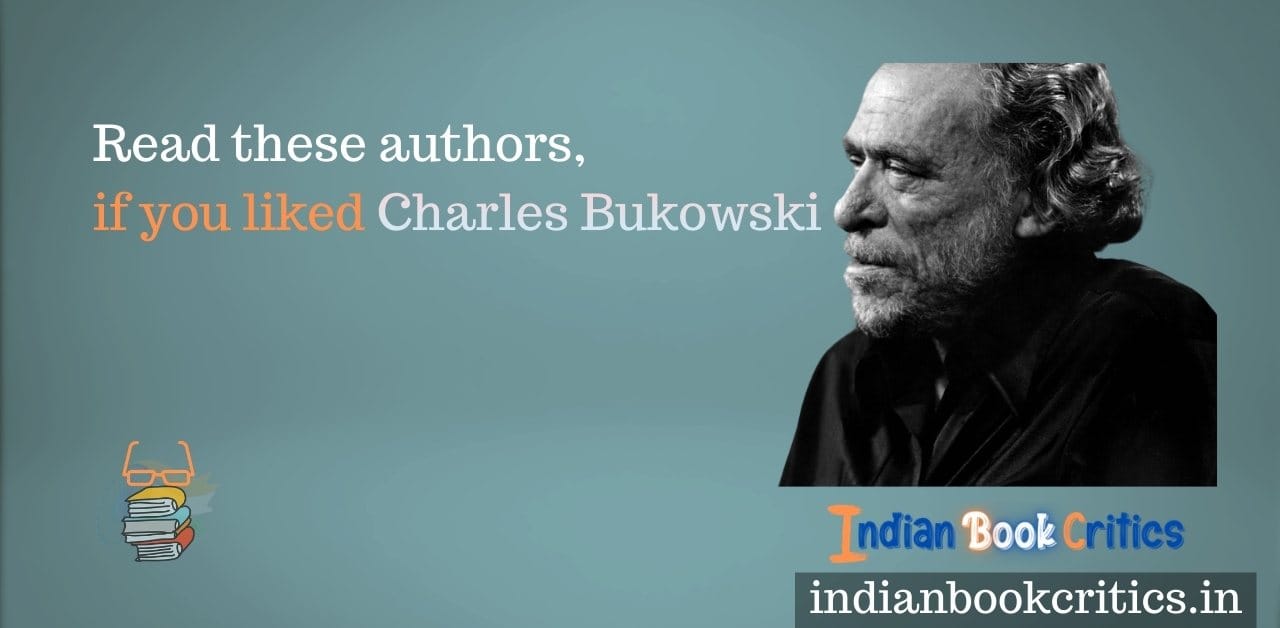
Readers who discover Charles Bukowski often feel that they have stumbled upon something unusually direct and honest. His writing does not try to impress with elaborate literary decoration. Instead, it speaks plainly about the fragile, messy, and often absurd experience of being human. He wrote about cheap apartments, lonely nights, dead-end jobs, failed relationships, and the stubborn instinct to keep going anyway. Bukowski made literature out of what many writers would have ignored.
Once someone becomes comfortable with that voice, the natural question appears. Are there other writers who carry a similar spirit? The answer is yes, though none of them is identical to Bukowski. What they share is a willingness to write about ordinary life without disguising its darker corners. They often focus on outsiders, dreamers, drifters, and people who do not quite fit into respectable society. Their writing tends to be emotionally direct, sometimes funny, sometimes brutal, and occasionally unexpectedly tender.
If Bukowski’s work has stayed with you, the following authors and poets are worth exploring.
1. John Fante
One cannot speak about Bukowski’s literary influences without mentioning John Fante. Bukowski openly admired him and frequently described him as one of the greatest writers he had ever read. Fante’s most famous novel, Ask the Dust, follows Arturo Bandini, a struggling writer wandering through Los Angeles during the Great Depression.
What makes Fante fascinating is his emotional honesty. His characters are proud, insecure, ambitious, and often ridiculous in their attempts to become something important. The tone moves easily between humour and despair. Bukowski once said that discovering Fante felt like finding a writer who spoke directly to his own life. Readers who enjoy Bukowski’s mixture of arrogance, vulnerability, and persistence will feel at home in Fante’s world.
2. Raymond Carver
Raymond Carver represents a quieter side of the same literary landscape. His short stories focus on ordinary people living in modest circumstances. The characters often work unstable jobs, struggle with alcohol, or face emotional breakdown within their families. Carver’s famous collection, What We Talk About When We Talk About Love, shows how powerful minimalism can be.
Carver does not shout or dramatise the way Bukowski sometimes does. Instead, he allows small gestures and unfinished conversations to carry emotional weight. Yet both writers share a deep interest in people who exist outside glamorous or successful lives. Reading Carver feels like sitting quietly inside someone else’s living room while the tension slowly reveals itself.
3. Hunter S. Thompson
If Bukowski represents the poet of rough everyday survival, Hunter S. Thompson represents the rebellious spirit of American counterculture. His writing combines journalism, autobiography, and wild storytelling in ways that changed modern nonfiction. His most famous book, Fear and Loathing in Las Vegas, captures the chaos and disillusionment of the American dream through an unforgettable road trip narrative.
Thompson’s voice is louder and more explosive than Bukowski’s, yet the two writers share an instinctive distrust of authority and social pretence. Both expose the absurdities hidden beneath respectable institutions. Readers who appreciate Bukowski’s refusal to behave politely in literature will likely find Thompson’s energy irresistible.
4. Henry Miller
Henry Miller belongs to an earlier generation but remains deeply connected to the literary spirit that Bukowski later embodied. Miller’s controversial novel Tropic of Cancer shocked readers with its openness about sexuality, poverty, and artistic struggle.
Miller writes with a sense of liberation that still feels daring. His work celebrates freedom, even when that freedom leads to chaos or instability. Like Bukowski, Miller believed that literature should come from lived experience rather than intellectual performance. Both writers explore the lives of artists trying to survive in environments that rarely reward honesty.
5. Jack Kerouac
Jack Kerouac became famous as one of the central figures of the Beat Generation. His novel On the Road captures the restless spirit of postwar America through the journeys of young people searching for meaning beyond conventional life.
Kerouac’s style is more lyrical than Bukowski’s, often rushing forward in long, rhythmic sentences that imitate the feeling of spontaneous thought. Yet both writers share a fascination with wandering lives. Their characters travel through cities, bars, and highways while searching for something that remains just out of reach.
6. Richard Brautigan
Richard Brautigan brings a strange and playful dimension to outsider literature. His writing often blends humour with surreal imagination. His novel Trout Fishing in America moves through fragments of narrative that feel both whimsical and melancholic.
Brautigan’s characters frequently exist on the edge of society, much like Bukowski’s drifters and gamblers. However, Brautigan approaches these figures with a lighter and more dreamlike tone. Readers who appreciate the odd tenderness hidden within Bukowski’s cynicism may enjoy Brautigan’s unusual perspective on American life.
7. Jim Harrison
Jim Harrison combines raw physical experience with philosophical reflection. Known for works such as Legends of the Fall, Harrison writes about landscapes, solitude, appetite, and the complicated emotions that accompany ageing.
His characters often struggle with the same impulses that appear in Bukowski’s work. They drink too much, love imperfectly, and search for meaning in unexpected places. Harrison’s prose carries a slightly more reflective tone, yet he shares Bukowski’s respect for life lived outside polite expectations.
8. Denis Johnson
Denis Johnson’s writing explores addiction, spiritual longing, and the strange moments of grace that appear within broken lives. His celebrated story collection Jesus’ Son follows a narrator moving through a landscape of drugs, hospitals, and uncertain friendships.
Johnson’s characters resemble Bukowski’s in their vulnerability and instability. However, Johnson often adds a subtle spiritual dimension to the narrative. His stories suggest that even within chaos, there are fleeting moments of clarity.
Why Readers Move From Bukowski to These Writers?
The connection between these writers lies not in imitation but in attitude. Each of them writes with a willingness to confront the uncomfortable parts of life. They resist literary politeness and instead focus on honesty, even when that honesty feels rough or awkward.
Bukowski once said that great writing should make the reader feel something real rather than simply admire the author’s intelligence. The authors listed above share that instinct. Their work reminds readers that literature does not need perfect heroes or dramatic plots to remain powerful. Sometimes, a tired worker sitting alone with a drink has more truth to reveal than a thousand glamorous characters.
Readers who start with Bukowski often discover that this world of writing is surprisingly large. It includes poets, novelists, journalists, and storytellers who all believe that life, even in its most imperfect form, deserves to be written about without disguise.
And once you begin reading these writers, you realise that Bukowski was not simply a solitary figure shouting from the margins. He was part of a long tradition of voices that refused to pretend life was cleaner than it really is.
Chandan for Indian Book Critics